Channel Letter Signs for Denver Metro Businesses
Dimensional illuminated lettering designed for your storefront, brand, and viewing distance.
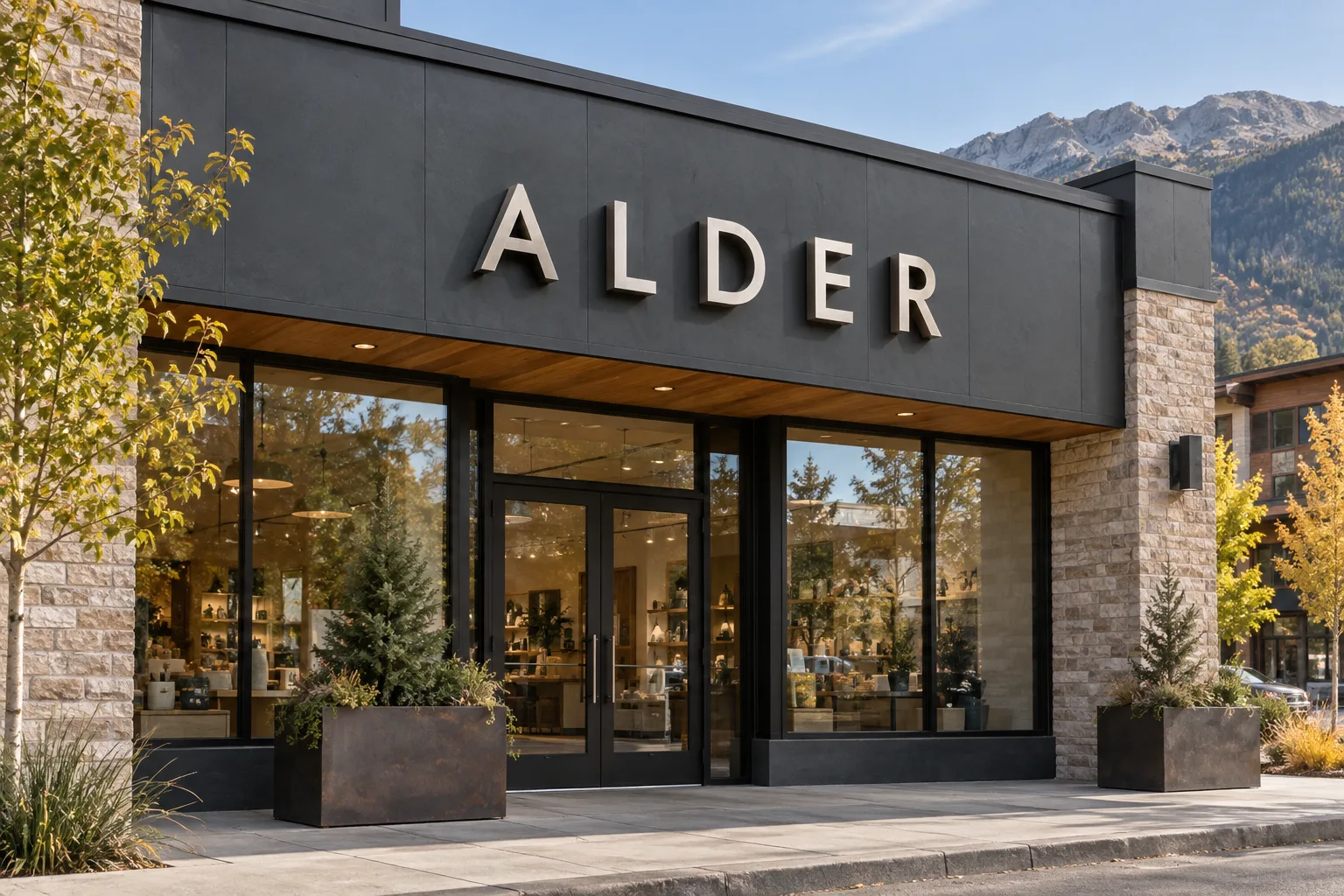
Fictional business · Not a completed Radiance project.
Channel letter signs for Denver Metro businesses
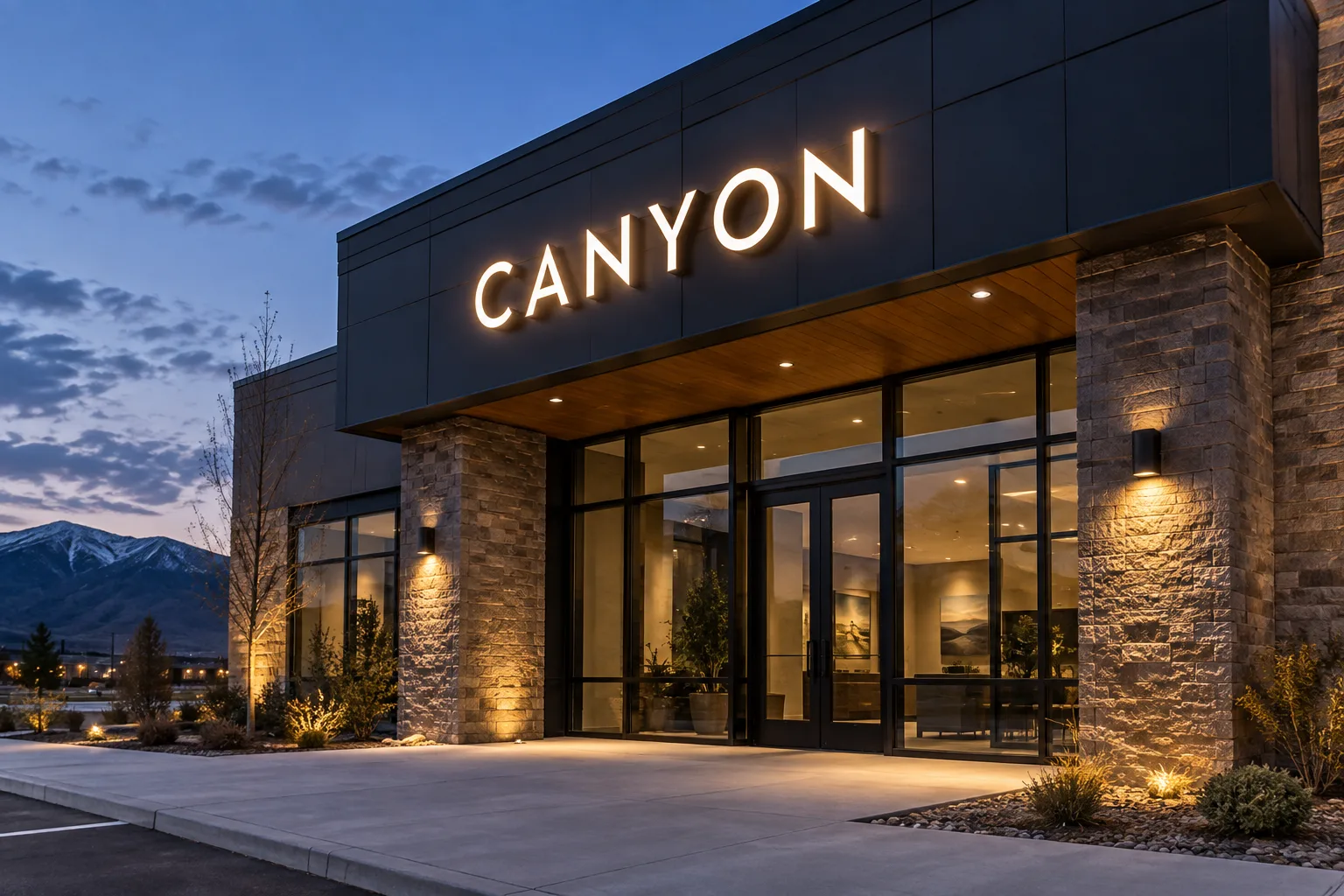
Channel letters are individually fabricated, three-dimensional letters and logo shapes mounted to the face of your building. They are the default choice for retail, restaurant, and ground-floor office tenants because they read cleanly from the road at speed, stay legible after dark, and satisfy the letter-height and illumination rules most landlords and municipalities write into their sign criteria.
Channel letters can suit businesses that are opening a new location, rebranding an existing one, or replacing a sign that has aged out — faded faces, dead LED modules, or lettering left behind by the previous tenant.
Professional design and installation matter more here than on most sign types. A channel letter set is an electrified assembly bolted to the exterior of a building, usually above a public sidewalk. Getting the mounting, weatherproofing, and electrical connection right is the difference between a sign that runs for a decade and one that leaks, fails inspection, or has to come back down.
Options and configurations
- Front-lit — illuminated acrylic faces with trim cap edges. The most legible option at distance, and the most common choice for retail and restaurant frontage.
- Halo-lit (reverse channel) — solid metal faces with light washing the wall behind. Reads as premium and architectural; used heavily on office, medical, and professional buildings.
- Combination-lit — front and halo illumination together, for maximum presence after dark.
- Open-face — exposed LED or neon behind an open front. A deliberately retro, high-impact look for bars, entertainment, and hospitality.
- Raceway-mounted — letters mounted to a single painted enclosure carrying the wiring and power supplies. Often required by landlords, and easier to permit and service.
- Individually mounted (flush or stud-set) — each letter fixed directly to the wall with the wiring run behind. The cleanest look, but it needs wall penetrations and a substrate that can take them.
- Logo cabinets — a fabricated cabinet alongside the lettering for logo marks that can’t be built as individual letters.
- Colours and finishes — brand-matched acrylic faces, painted or brushed metal returns, contrasting trim cap. We show you day and night behaviour before anything is built: a face colour that looks right at noon can look wrong when it’s lit.
Project considerations
- Site survey — we measure the fascia, confirm the mounting substrate, and check what sits behind it. EIFS, brick, precast, and metal panel all mount differently.
- Landlord criteria — most multi-tenant properties publish tenant sign criteria governing letter height, illumination type, raceway colour, and setback. They are usually stricter than the city code, and they get approved first.
- Municipal sign codes — Denver, Aurora, Lakewood, Boulder and the rest each run their own sign code and permit process, with their own limits on sign area, projection, and height.
- Electrical access — a dedicated circuit and a switch or timer have to reach the sign location. Where none exists, an electrician has to be scheduled into the job.
- Engineering — larger sets, long raceways, and anything at height typically need stamped drawings for permit.
- Visibility — setback from the road, traffic speed, sightlines, and tree cover all change the letter height you actually need. We size letters to the viewing distance, not to the space available.
- Building materials — the substrate determines the fastener, the sealant, and whether a raceway is required rather than optional.
- Installation equipment — height and access dictate whether the install needs a lift, and whether a lane or sidewalk closure has to be coordinated.
- Colorado weather exposure — UV at altitude fades unrated acrylic and vinyl faster than at sea level, and freeze-thaw cycles find every gap in a poorly sealed penetration. We specify UV-stable materials and sealed returns as standard.
The process
Consultation → site survey → concept and mockup → landlord approval → permitting → fabrication → installation → inspection → maintenance
We manage every step, including the ones that involve other parties. You approve the design and the schedule; we handle the criteria submittal, the permit application, the production specification and quality check, and the installation itself.
What drives the cost
We quote every channel letter project individually. The variables that move the number most:
- Overall sign size and letter height
- Number of letters, and how complex the letterforms are
- Illumination type — front-lit, halo, combination, or non-illuminated
- Mounting method — raceway versus individually mounted
- Access and installation height, and whether a lift or closure is needed
- Electrical work required to get power to the sign location
- Whether stamped engineering is required for permit
- Permit and landlord review fees for your jurisdiction and property
- Materials and finishes — standard acrylic and paint versus specialty metals
Two identical-looking signs can differ substantially in price when one mounts to an accessible single-storey fascia and the other needs a lift, an electrician, and engineered drawings.
Where channel letters typically go
- Multi-tenant retail centres — raceway-mounted front-lit letters sized to the centre’s tenant criteria, so every storefront reads consistently.
- Standalone restaurants — larger front-lit or combination-lit sets on two or three elevations, to catch traffic from every approach.
- Professional and medical offices — halo-lit metal letters at the building entrance, often paired with a monument sign at the drive.
- Rebrands across several sites — one approved letter specification repeated location to location, phased so the changeover lands everywhere in the same window.
Channel letter FAQs
How long does a channel letter project take? Plan on several weeks from approved design to installation. Fabrication is rarely the long pole — landlord approval and municipal permit review usually are, and both vary by property and jurisdiction. We give you a dated schedule at design approval, and flag early if your opening date is at risk.
Do I need landlord approval as well as a city permit? Almost always, and the landlord comes first. Most leases require written sign approval, and most multi-tenant properties have published criteria. Submitting for permit before criteria approval is the most common way these projects lose two weeks.
Front-lit or halo-lit? Front-lit is more legible from distance and from a moving car — choose it for retail and restaurant frontage. Halo-lit reads more premium and architectural, but it needs a clean wall and a closer viewing distance to work. If the sign has to pull traffic off an arterial road, front-lit.
Who handles the electrical connection? Electrical responsibilities are confirmed in the proposal. We coordinate appropriately qualified trades for the connection and any new circuit work included in the project.
What happens when an LED module fails? Modern LED channel letters run for years, and failures are usually a single module or power supply rather than the whole sign. Ask us about service options for your sign; availability and scope are confirmed before booking.
Can you match my exact brand colour? As closely as the materials allow, and we show you how the colour behaves both unlit and illuminated. Translucent acrylic shifts when it’s lit from behind, so the daytime match and the night-time match are two separate decisions.
Will a channel letter sign survive Colorado weather? Yes, when it’s specified for it. We use UV-stable acrylic and rated finishes, seal every wall penetration, and design the returns to shed water rather than hold it.
Next step
Send us the address, a photo of the building frontage, and your logo. We’ll tell you what the property’s criteria and the local sign code will allow before you spend anything on design.
Request a channel-letter sign consultation
Related: Storefront signs · Building signs · Illuminated signs · Monument signs
Related exterior signs
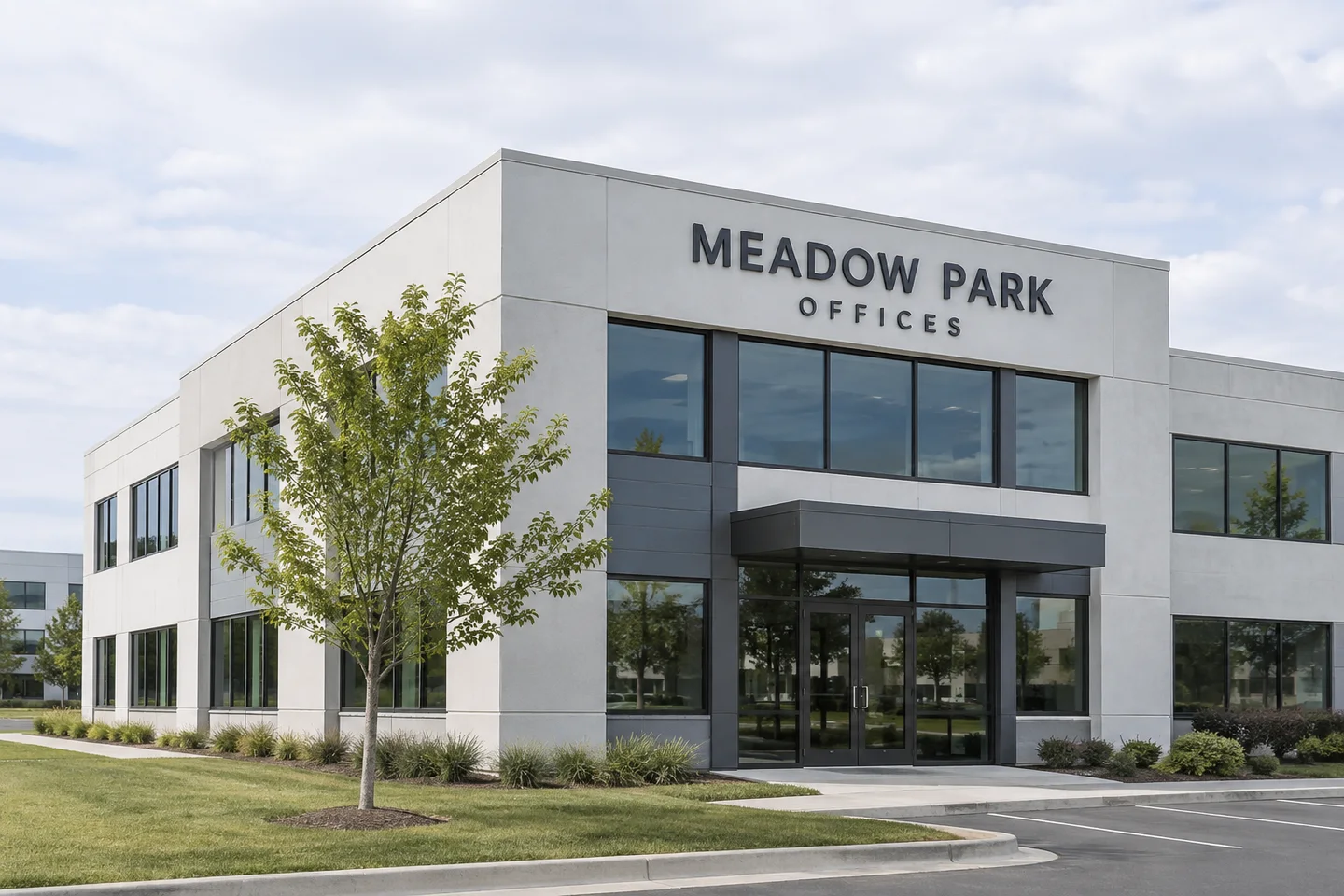
Building Signs
Large-format wall and fascia signage that puts your name on the building itself.
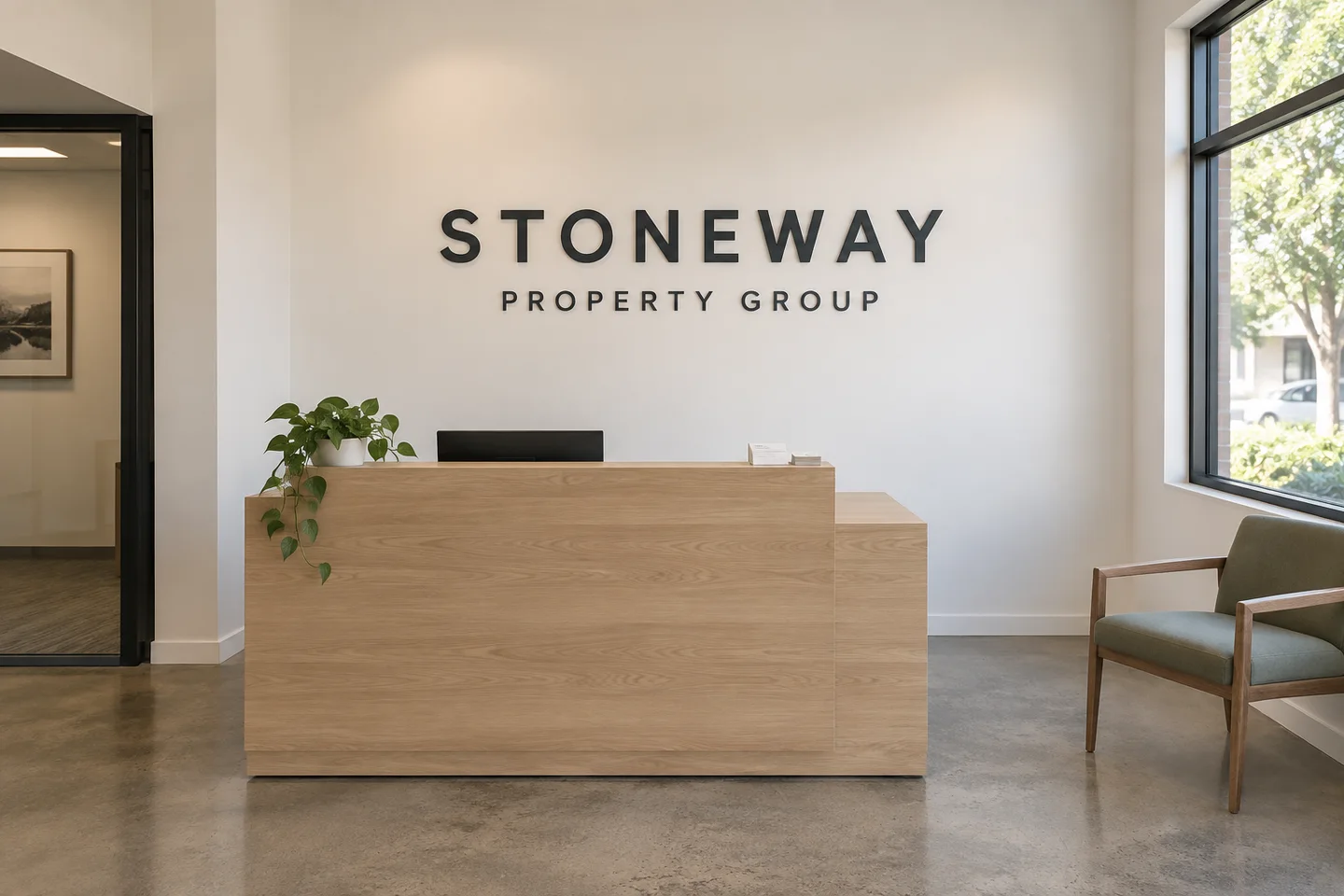
Dimensional Letters
Premium metal, acrylic, and foam letters that add depth and a polished, professional look.
Illuminated Signs
Energy-efficient lighted signage that keeps your brand glowing around the clock.